


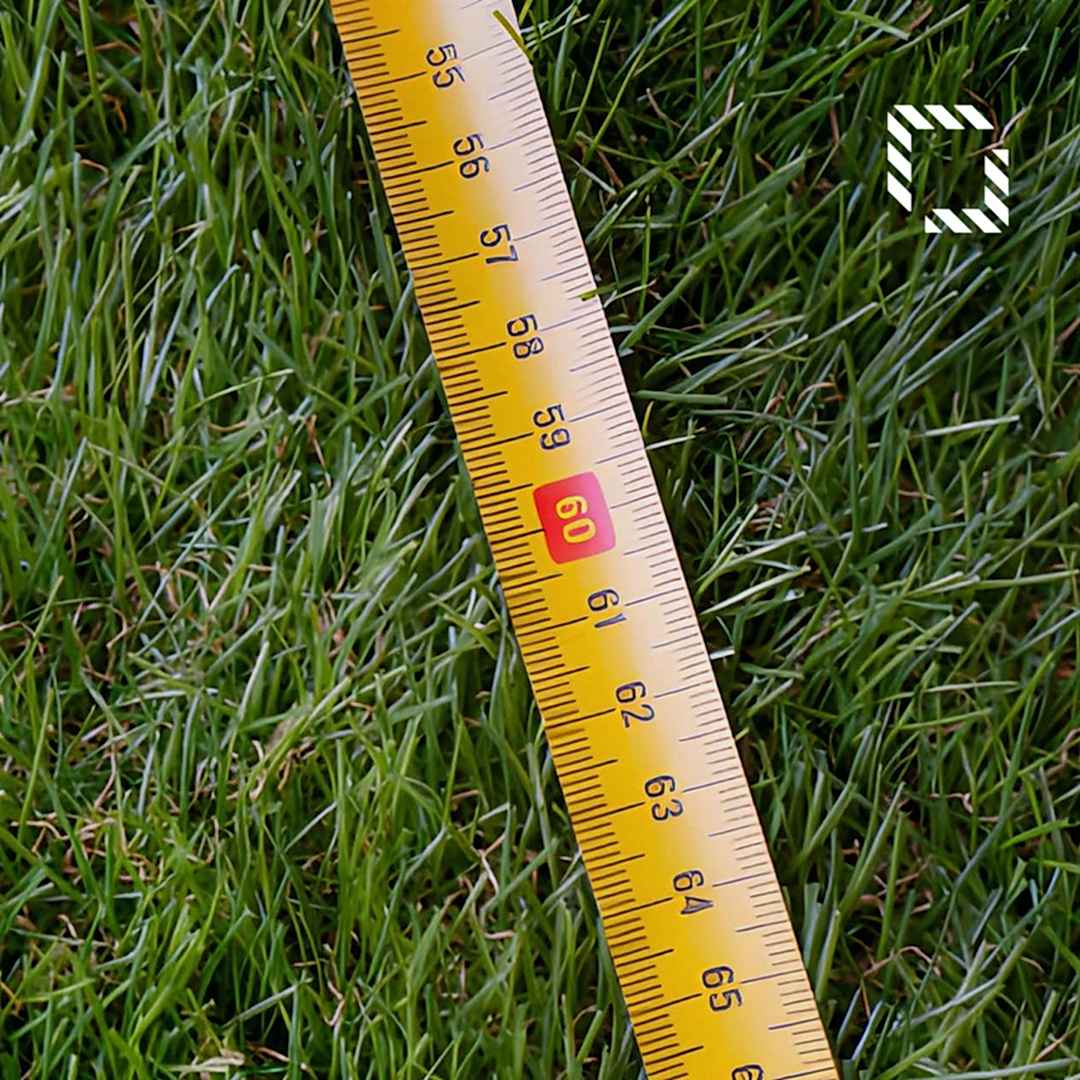
How to measure for artificial grass is the first thing homeowners search when they start planning a new lawn. Measuring sounds simple, yet a small mistake can lead to gaps, wasted material or unexpected costs. When you understand your garden’s shape and know the right method, you can estimate accurately and move forward with confidence. This clarity makes installation smoother and helps brands like Ilke Sport offer the right product for your space.
- Why Do You Need To Measure For Artificial Grass?
- What Tools Do I Need to Measure for Artificial Grass?
- Step-By-Step Artificial Grass Measuring Guide
3.1 Measure Widest and Longest Points
3.2 Square and Rectangle Lawns
3.3 Round Lawns
3.4 Angled Lawns
3.5 L Shaped Lawns
Why Do You Need to Measure for Artificial Grass?
Measuring your lawn ensures you order the correct amount of turf. It prevents unnecessary expenses and avoids patchy joins. Accurate measurements help installers cut clean lines, reduce trimming and keep the final look seamless. A well measured space always leads to a better finish.
The main concern usually involves appearance. Clean edges, level surfaces, and proper groundwork allow both materials to sit side by side without looking forced. Ilke Sport products are developed to maintain their shape and color, which helps create smooth transitions between surfaces.

What Tools Do I Need to Measure for Artificial Grass?
You don’t need many tools to measure your lawn accurately. A few simple items make the entire process smoother:
- Tape measure: Essential for checking the length and width of your lawn.
- Long measuring tape (optional): Useful for larger gardens where standard tapes fall short.
- Notebook or digital app: Helps you record measurements clearly so you don’t lose track while calculating.
- A helper (optional): Someone to hold the other end of the tape measure makes long-distance measuring faster and more accurate.
Keep these tools close while you work. It speeds up the process and reduces mistakes.
Step-by-Step Artificial Grass Measuring Guide
Every lawn has a shape. Once you understand yours, calculating the square metres becomes easier. You measure. Here, how to measure for artificial grass comes into play again because accuracy depends on following the right method for each shape.
Measure Widest and Longest Points
No matter what shape your lawn has, always start by finding the longest point and the widest point. Write them down. These two numbers guide the entire calculation and help you understand how rolls will fit. Artificial grass rolls come in fixed widths, so knowing these points avoids awkward cuts later.
Square and Rectangle Lawns
Square or rectangular lawns are the easiest to measure. Multiply the length by the width to get the total square metre.
- Formula: length x width = total square metre
This method gives you a clean and reliable number. If one side is slightly uneven, always measure the longer point and use that value. Artificial grass rolls fit well into straight edges, so this is usually the most efficient layout.
Round Lawns
Round lawns require a little more attention. Measure the diameter at the widest point and round it up to the nearest even number. This helps because most rolls come in 2 metre or 4 metre widths.
- Formula: length x width = total square metre
Once you round the diameter, use it for both length and width. This ensures you cover the full circle without missing edges.
Angled Lawns
Angled or irregular lawns look tricky, but the method stays simple. Find the widest point. Then measure the longest point. Multiply these two numbers to get the total square metres you need.
- Formula: length x width = total square metre
By treating the angled shape like a large box, you avoid underestimating the amount of turf required. It also makes installation cleaner because you trim the angles after laying the roll.
L Shaped Lawns
L shaped lawns need one extra step. Break the lawn into two rectangles. Measure each section separately. Multiply length by width for each part, then add the totals together.
- Formula: (a1 length x a1 width) + (a2 length x a2 width) = total square metre
This approach gives you a precise number. It also helps you see how to position rolls before installation. Good planning always saves time and material.
Measuring your garden correctly sets the foundation for a smooth artificial grass installation. When you follow these methods, you avoid mistakes and get a clean, professional finish. If you want expert support with your measurements or installation, contact Ilke Sport!