


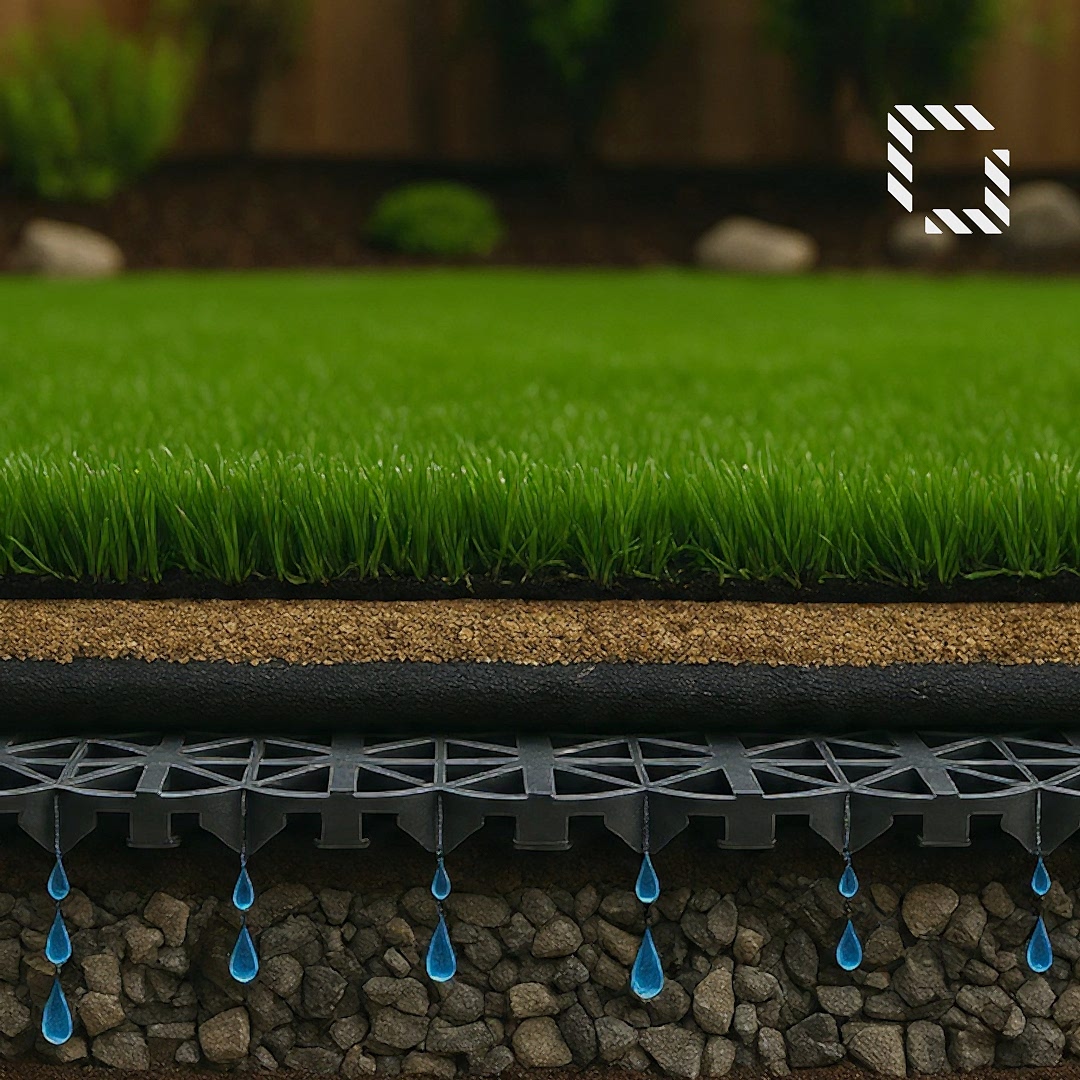
If you’re planning to install artificial turf, the first thing you need to know is what to put under artificial grass. The secret to a perfect lawn is preparing the right base. What lies beneath your grass decides how natural it feels, how well it drains, and how long it lasts. So, before you roll out that green, let’s talk about the layers that make all the difference.
Why Proper Ground Preparation Matters for Artificial Grass
Recommended Layers Under Artificial Grass
How to Prepare the Base Before Artificial Grass Installation
Mistakes to Avoid When Preparing the Base for Artificial Grass
FAQs
Why Proper Ground Preparation Matters for Artificial Grass
Think of the base as the backbone of your artificial grass. Without a solid foundation, the surface will sink, wrinkle, or flood after a rainy day. Proper ground preparation creates a strong and even platform that supports your turf and helps water drain easily.
When installers skip this step, the result often looks uneven, traps odors, or even grows weeds. But if the base is compacted and layered correctly, your lawn will stay smooth, clean, and low-maintenance. If you’re wondering again what to put under artificial grass, the answer begins with the right layers.
Recommended Layers Under Artificial Grass
Each layer beneath the turf has a purpose. Together, they create a surface that looks great and performs even better.
Crushed Rock or Gravel Base
The first layer is crushed rock or gravel. This material forms the structural foundation of your lawn. When compacted properly, it keeps the ground firm and prevents movement under pressure. It also creates natural drainage channels so rainwater can pass through easily instead of pooling on the surface.
Sharp Sand Layer
On top of the compacted rock, a thin layer of sharp sand is added to smooth out small gaps and irregularities. This layer doesn’t carry weight; it simply evens out the surface so the turf can sit perfectly flat. The sand also helps with minor drainage and allows you to make small adjustments in height while leveling. Too much sand can make the grass feel spongy or uneven, while just the right amount ensures a smooth, natural appearance once the turf is brushed.

Geotextile
A geotextile layer is one of the most important steps before laying your turf. It’s a special synthetic fabric placed directly under the artificial grass to stop weeds from growing. Unlike plastic sheets, it allows rainwater to flow through freely. That means no puddles, no mud, and no mess. At Ilke Sport, we use high-quality geotextile fabrics that keep your turf clean and stable all year round. They’re easy to install and perfect for any space.
Shock pad
The shock pad layer is another smart addition, especially if comfort and safety matter to you. Made from closed-cell polyethylene foam, it softens impact and helps with water drainage. You’ll feel the difference immediately when walking or playing on it. Key benefits of Ilke Sport shock pads include:
- Excellent shock absorption and ball bounce for sports areas
- Long-lasting structure that doesn’t freeze or crack
- Easy installation in almost any weather
Together, the geotextile and shock pad layers create a strong, comfortable, and well-drained base. Still asking yourself what to put under artificial grass? Start with these two essentials.

How to Prepare the Base Before Artificial Grass Installation
Follow these short, clear steps to build a solid, well-drained base.
- Clear the area: Remove old grass, weeds, roots, stones, and debris. Start with a clean, flat surface.
- Excavate the ground: Dig 7–10 cm across the whole area. Go a little deeper for heavy-use zones. Dispose of all organic soil.
- Add crushed rock or gravel: Lay 5–10 cm of angular aggregate. Avoid round pebbles. Angular stone locks together and drains well.
- Compact the base: Mist lightly with water. Compact in overlapping passes until footprints barely show. The surface should feel firm and even.
- Lay geotextile fabric: Roll it out over the compacted base. Overlap seams 10–15 cm and pin edges. It blocks weeds and keeps layers separated while letting water pass.
- Add a shock pad (optional): Place shock pad where comfort or safety matters, like play areas or sports surfaces. Butt edges tightly and tape if required.
- Spread sharp sand: Add a thin 5–10 mm skim. Screed it smooth. Lightly mist and gently compact for a true, even finish.
Mistakes to Avoid When Preparing the Base for Artificial Grass
Even if you know what to put under artificial grass, skipping key steps can ruin your installation. The biggest mistake is laying turf directly on soil. Soil moves, holds water, and leads to uneven surfaces within weeks. Always build a compacted crushed rock base first. It’s what keeps everything stable and drains water properly. Another major error is poor compaction. If the base isn’t packed tightly, it will sink or shift, no matter how good the turf is.
Using the wrong materials is just as serious. Round pebbles, beach sand, or cheap filler trap moisture and collapse under pressure. Stick to angular crushed rock and sharp sand. Forgetting geotextile fabric is another common issue that allows weeds to grow and weakens the layers beneath.
The key is patience and precision. A durable, natural-looking lawn starts with careful groundwork. At Ilke Sport, we know that lasting results come from what’s beneath the surface as much as what’s on top. For professional guidance and expert installation support, contact our team!
FAQs
The most effective base for artificial grass is a combination of crushed rock, sharp sand, and geotextile fabric.
Before you install artificial turf, prepare the ground with layers that create stability and proper drainage. Start with crushed rock to form a strong base, then cover it with geotextile fabric, and finally add a thin layer of sharp sand to level the surface. This structure ensures your turf stays even, dry, and long-lasting.
Artificial grass should never be installed directly on soil because soil expands, contracts, and retains water. These natural movements make the turf uneven, cause drainage problems, and shorten its lifespan.
If you skip the sand layer, your artificial grass may shift, develop ripples, or wear unevenly over time. The sand gives the turf weight, helps it stay in place, and keeps the blades standing upright.