


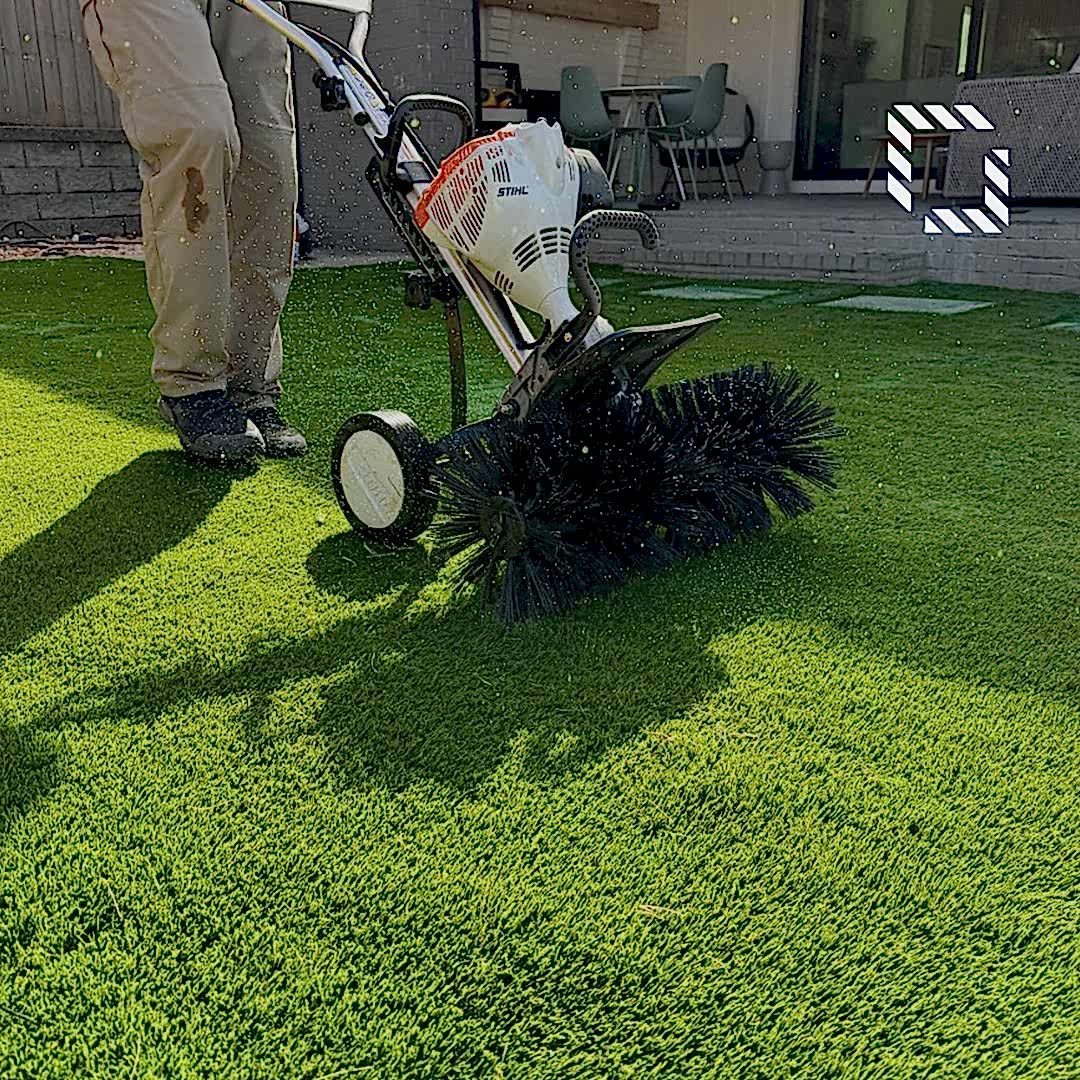
Artificial grass is built to last, yet even the best installations can face problems over time. At ILKESPORT, we work with customers facing common issues with their turf and provide solutions that last. Here are the common issues with artificial grass and how to repair them.
- Melting and Burnt Spots
- Flattened and Matting Grass
- Weed Growth
- Displaced Infill Granules
- Pooling Water and Poor Drainage
- Ripples and Wrinkles
- Separation of Seams and Edges
1. Melting and Burnt Spots
Artificial grass doesn’t catch fire, but it can melt when exposed to extreme heat. Things like embers from a BBQ, fire pits, or even dropped cigarette butts can cause burns or melting spots on your turf. The damage can vary from tiny spots to larger, unsightly patches.

2. Flattened and Matting Grass
Heavy foot traffic over time can lead to flattened areas on the turf. In high-usage zones, the grass fibers may mat down, creating an uneven texture. Turf with low infill is especially susceptible to this issue.
3. Weed Growth
While artificial grass won’t grow weeds naturally, seeds can still find their way in. Animals, pets, or wind can carry seeds that may germinate in the infill. If not promptly removed, these weeds can disrupt the surface and affect drainage.
4. Displaced Infill Granules
Infill is important for supporting the grass blades, but it can shift due to foot traffic, pets, and other activities. This displacement leaves the turf looking uneven or thin in certain areas, particularly in high-traffic zones.

5. Pooling Water and Poor Drainage
Proper drainage is key for maintaining artificial grass. When drainage holes become clogged with debris, water cannot flow through, leading to puddles. This can cause water to pool on the surface, creating an unsightly and stagnant environment.
6. Ripples and Wrinkles
Improper installation or ground movement can lead to wrinkles or ripples in the turf. When the base isn’t secured correctly, areas of the grass may buckle, resulting in noticeable folds, especially along seams or at the edges.
7. Separation of Seams and Edges
Over time, turf seams and edges can start to separate. This is usually caused by poor installation or shifting ground. Loose edges or adhesive failure can create gaps between sections, which will worsen if not fixed quickly.